CT Angiography in Pokhara — Coronary, Brain and Body CTA at KDRC
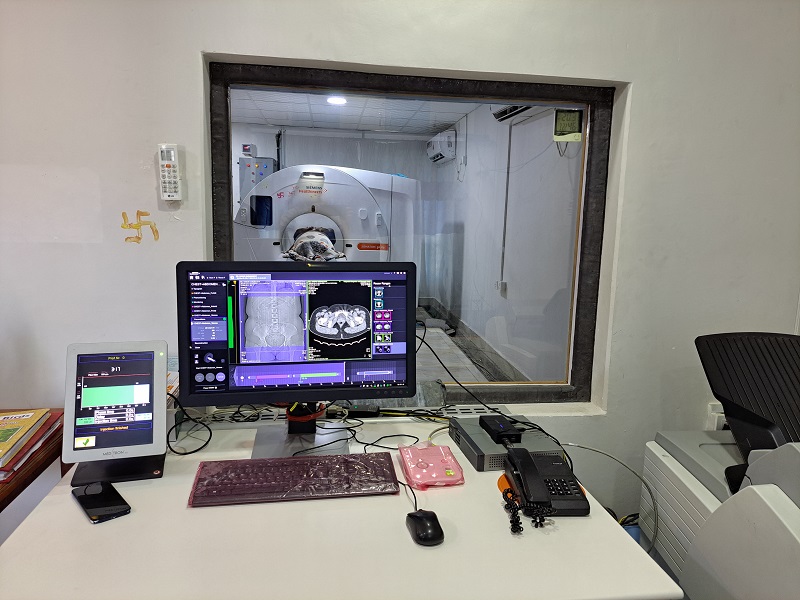
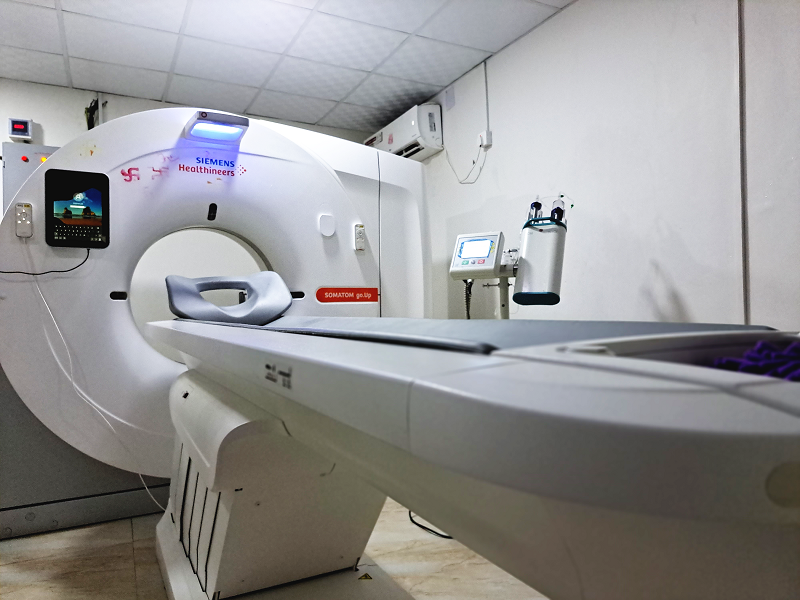
CT angiography in Pokhara at KDRC is a contrast-enhanced CT scan that maps the arteries and veins of the heart, brain, neck, lungs, abdomen and limbs without inserting a catheter. The dye is injected into an arm vein, and the 192-slice Siemens scanner captures detailed 3D vessel images within seconds for radiologist reporting.
Also called: CTA, angiography, ct angio, ct angiogram, coronary ct angiography, ccta
- Duration
- Time inside the scanner is usually one to two minutes,
- Reported by
- Consultant radiologists
- Location
- Amarsingh Chowk, Pokhara-10
- Book / price
- 061553538 · 9856077433
 Dr. Nawaraj Paudel · Consultant RadiologistMedically reviewed by Dr. Bishworaj Bastakoti · MD Radiology Last reviewed 12 Oct 2026Updated 12 Oct 2026
- CT angiography images blood vessels using dye injected into an arm vein, with no catheter in an artery.
- KDRC in Pokhara performs CTA on a 192-slice high-resolution Siemens CT scanner.
- Coronary CTA works best with a slow, regular heart rate, so caffeine is avoided beforehand.
- Tell us about contrast allergy, kidney disease, diabetes medicines and pregnancy before the scan.
- Time inside the scanner is usually only one to two minutes.
- CTA prices depend on the vessels studied; call 061-553538 or 9856077433 for a quote.
On this page (13 sections)
- What is CT angiography?
- Why does a fast CT scanner matter for angiography?
- What does CT angiography show? Uses and types
- Coronary CT angiography in Pokhara
- How to prepare for CT angiography
- What happens during CT angiography?
- Is CT angiography safe? Contrast, kidneys and radiation
- CT angiography in pregnancy, breastfeeding and for children
- CT angiography vs catheter angiography vs Doppler
- When will I get my CT angiography report?
- How much does CT angiography cost in Pokhara?
- Why choose KDRC for CT angiography in Pokhara?
- How to book CT angiography at KDRC
What is CT angiography?
CT angiography (CTA) is a CT scan taken while an iodine-based contrast dye flows through your blood vessels, producing detailed 2D and 3D pictures of the arteries and veins without inserting a catheter into an artery. If you need CT angiography in Pokhara, Kaligandaki Diagnostic and Research Center (KDRC) performs it on its 192-slice high-resolution Siemens CT scanner at Amarsingh Chowk.
The dye is injected through a small cannula in a vein in your arm. The scanner is timed so that it captures images at the exact moment the dye fills the vessels being studied. A computer then reconstructs the data into images that show the vessel walls, narrowings, blockages, bulges and clots. Doctors can rotate these 3D views on screen and look at a vessel from any angle.
Many patients simply ask for an "angiography test". There are two main kinds. Catheter angiography threads a thin tube through an artery in the groin or wrist. CT angiography, by contrast, needs only an injection into an arm vein. CTA is fast, non-invasive and needs no sedation or general anaesthesia.
Why does a fast CT scanner matter for angiography?
Speed matters in CT angiography because contrast dye passes through the arteries in seconds, and a fast scanner can capture the whole vessel tree while it is brightly filled. KDRC's 192-slice CT covers a large area in each rotation, which helps in several ways:
- Full coverage in one pass. Long vessels such as the aorta or the leg arteries can be imaged from top to bottom while the dye is at its peak.
- Short breath-holds. Chest and abdominal angiograms need you to hold your breath only briefly.
- Clearer heart images. The heart moves constantly, and fast scanning synchronised with your ECG reduces motion blur in the coronary arteries.
- Fine detail. Thin slices show small branches, the edges of a narrowing and the neck of an aneurysm.
The general CT platform at KDRC is described on our CT scan in Pokhara page.
What does CT angiography show? Uses and types
CT angiography is used to find blocked or narrowed arteries, aneurysms, blood clots, torn vessels, vascular malformations and injuries, and to plan surgery or stent procedures. The test is named after the area being studied. The table below lists the common types and why each is done.
| Type of CT angiography | Vessels studied | Common reasons |
|---|---|---|
| Coronary CT angiography (CCTA) | Heart (coronary) arteries | Chest pain, suspected coronary artery narrowing, checking bypass grafts |
| CT pulmonary angiography (CTPA) | Lung arteries | Suspected pulmonary embolism (blood clot in the lungs) |
| CT angiography of the brain | Arteries inside the head | Aneurysm, bleeding, stroke, arteriovenous malformation |
| CT angiography of the neck (carotid) | Carotid and vertebral arteries | Stroke or "mini-stroke", carotid narrowing |
| CT aortogram | Aorta in the chest and abdomen | Aortic aneurysm, aortic dissection, planning repair |
| CT angiography of the kidneys | Renal arteries | Narrowed kidney arteries, high blood pressure work-up, donor assessment |
| Peripheral CT angiography | Arteries of the legs or arms | Leg pain on walking, non-healing wounds, peripheral artery disease, injury |
| CT venography | Veins | Clots or narrowing in large veins |
CTA is also used before and after surgery, to guide stent placement and to map the arteries that feed a tumour. After a road accident or fall, it can quickly show whether a major vessel is injured.
Who may not be suitable for CT angiography?
Some people need extra checks or a different test before CT angiography. Your doctor and our radiologist will look closely if you have:
- A previous allergic reaction to iodine contrast dye
- Kidney disease or borderline kidney function, especially with diabetes
- Pregnancy or possible pregnancy
- An irregular or very fast heartbeat, for coronary studies
- Difficulty lying flat or holding your breath for a few seconds
- Thyroid problems, which the team asks about before giving iodine contrast
None of these automatically rules out CTA. They mean the team takes extra precautions, gives medicine beforehand, or chooses another test such as Doppler ultrasound. Telling us early, when you book, avoids a wasted journey to Pokhara.
Coronary CT angiography in Pokhara
Coronary CT angiography (CCTA) is a heart scan that shows whether the coronary arteries are narrowed or blocked, using contrast dye and ECG-synchronised CT. It is the most common reason for a CT angiogram. It can also help plan procedures such as heart valve replacement, bypass surgery or stent placement.
Heart scans have a few extra steps compared with other CTAs:
- ECG leads. Small sticky electrodes on your chest let the scanner take pictures in step with your heartbeat.
- Heart rate control. Images are clearest when the heart beats slowly and regularly. Prospectively triggered scans are typically used when the heart rate is below about 65 beats per minute. If your heart is faster, the doctor may give a beta-blocker medicine to slow it.
- No caffeine beforehand. Tea, coffee, energy drinks and cola raise the heart rate. One widely used protocol asks patients to avoid caffeine for 12 hours before the scan.
- Short scan time. Time inside the scanner is usually only one to two minutes, though you may pass through more than once.
An irregular heartbeat, such as atrial fibrillation, can make coronary images harder to obtain. Tell us about any heart rhythm problem when you book. Your cardiologist decides whether CCTA, an exercise test or catheter angiography suits you best.
How to prepare for CT angiography
To prepare for CT angiography you usually avoid food for a few hours, tell us about allergies, kidney disease, diabetes medicines and pregnancy, and bring a recent kidney blood test if requested. Our team gives exact instructions when you book. The table below shows typical preparation by CTA type.
| Preparation | Most CT angiograms | Coronary CT angiography |
|---|---|---|
| Food | Usually nothing to eat for a few hours before | Usually nothing to eat for a few hours before |
| Caffeine | No special rule unless told | Avoid tea, coffee, cola and energy drinks, often for 12 hours |
| Usual medicines | Take as normal unless told otherwise | Take as normal unless told otherwise; ask about heart medicines |
| Diabetes medicine (metformin) | Tell us; your doctor may advise a short pause | Tell us; your doctor may advise a short pause |
| Blood test | Recent creatinine if you have kidney disease, diabetes or are older | Same |
| Bring | Doctor's request, previous scans, list of medicines | Same, plus any ECG or echo reports |
- Doctor's request and previous scans or angiograms
- Nothing to eat for the time our team advises
- No caffeine before a coronary CTA (often 12 hours)
- Tell us about contrast allergy, asthma, kidney disease and diabetes medicines
- Recent creatinine blood test if requested
- Tell us if you are or might be pregnant, or are breastfeeding
- List of all current medicines
- Loose clothing without metal
What happens during CT angiography?
During CT angiography a small cannula is placed in your arm, you lie on the scanner table, dye is injected by a pump, and the scanner takes images for a few seconds while you hold your breath. The steps below show a typical visit at KDRC.
- 1Book and get instructionsCall 061-553538 or 9856077433. Our team explains fasting, caffeine rules and any blood test needed.
- 2Registration and safety checkStaff ask about allergies, kidney disease, diabetes medicines, heart rhythm and pregnancy.
- 3Cannula and, for heart scans, ECG leadsA small cannula goes into an arm vein. For coronary CTA, electrodes are placed on your chest and heart rate is checked.
- 4Positioning on the scannerYou lie on the table and practise the breathing instructions with the technologist.
- 5Dye injection and scanA pump injects the dye and the scanner captures images in seconds while you hold your breath. A warm flush is normal.
- 6Rest, fluids and reportThe cannula is removed once you feel well. Drink plenty of fluids. A consultant radiologist reports the study and our team tells you when to collect it.
When the dye goes in you may feel warm all over, notice a metallic taste or feel as if you need to pass urine. These sensations are normal and fade within a minute or two. Tell the technologist at once if you feel pain, swelling or tingling at the injection site, because dye can rarely leak into the surrounding tissue. Expect about 20 to 60 minutes in the testing room including preparation, while the actual time in the scanner is only about one to two minutes.
After the scan the cannula is removed. Drink plenty of fluids for the rest of the day to help your kidneys flush the dye out. Because no sedation is used, most people can drive, eat and return to normal activities straight away.
Is CT angiography safe? Contrast, kidneys and radiation
CT angiography is safe for most people; the main risks are a reaction to the iodine contrast dye, strain on kidneys that already work poorly, and a small dose of X-ray radiation. Your doctor and our radiologist weigh these against the benefit of a clear answer.
Contrast dye reactions
Severe allergic reactions to iodine contrast are rare, and CT teams are equipped to treat them. Mild reactions such as itching, hives or sneezing are more common and usually settle quickly. If you have reacted to contrast before, your doctor may suggest medicine beforehand or a different test without iodine contrast.
Kidney function
The kidneys clear the dye from the body. In people who already have borderline kidney function and are at risk of kidney failure, contrast could worsen it. That is why we ask about kidney disease and diabetes, and may request a creatinine blood test. Poor kidney function can sometimes make CTA unsuitable, and Doppler ultrasound may be an alternative for some vessels.
Radiation dose
A coronary CT angiogram gives a typical adult dose of about 8.7 mSv, roughly three years of natural background radiation. Doses for other CTAs depend on the area covered. The chart below puts this in context.
Chest pain that is severe or lasts more than a few minutes, sudden breathlessness, sudden weakness or numbness of the face, arm or leg, slurred speech, or a sudden severe headache needs emergency hospital care now, not a booked scan. After the scan, get help immediately for breathing difficulty, swelling of the face or throat, or a spreading rash.
CT angiography in pregnancy, breastfeeding and for children
CT angiography is used in pregnancy only when the benefit clearly outweighs the risk, so always tell us if you are or might be pregnant. A suspected blood clot in the lungs during pregnancy is one situation where CT pulmonary angiography may still be the right test, and the radiologist keeps the dose as low as possible.
If you are breastfeeding, contrast manufacturers advise pausing for 24 to 48 hours after the injection. However, the amount of dye that reaches the baby through breast milk is extremely low, so many mothers continue after discussing it with their doctor. You can express milk before the scan if you prefer to pause.
Children have CT angiography only when it is essential, for example for congenital vessel abnormalities or injury, with child-sized low-dose settings. Radiation-free tests such as ultrasound or Doppler are considered first where they can answer the question.
CT angiography vs catheter angiography vs Doppler
CT angiography is a non-invasive scan through an arm vein, catheter angiography is an invasive procedure through an artery that can also treat a blockage, and Doppler ultrasound checks blood flow without dye or radiation. The comparison below shows the key differences.
| Feature | CT angiography | Catheter angiography |
|---|---|---|
| Access | Injection into an arm vein | Catheter through a groin or wrist artery |
| Invasive | No | Yes, small incision |
| Sedation | Not needed | Sometimes |
| Procedure time | Minutes in the scanner | 30 minutes to 2 hours |
| Treatment in same session | No | Yes (angioplasty or stent) |
| Feature | CT angiography | Catheter angiography | Doppler ultrasound |
|---|---|---|---|
| How dye or signal enters | Injection into an arm vein | Catheter threaded through an artery in the groin or wrist | No dye; sound waves |
| Invasive? | No | Yes, small incision under local anaesthetic | No |
| Sedation | Not needed | Sometimes | Not needed |
| Radiation | Yes | Yes | No |
| Typical procedure time | Minutes in the scanner | 30 minutes to 2 hours | 20 to 45 minutes |
| Can treat a blockage at the same time? | No | Yes (angioplasty, stent) | No |
| Best use | Diagnosis and planning, 3D vessel map | Diagnosis plus treatment | Neck, leg and abdominal vessel flow, follow-up |
CTA may give more precise anatomical detail than catheter angiography and can cost less. Catheter angiography remains the choice when treatment is planned in the same session. For long-term monitoring, many doctors alternate CTA with Doppler, which needs no contrast. Soft-tissue questions around the vessels may be answered by MRI.
When will I get my CT angiography report?
A consultant radiologist reviews the 2D and 3D images and writes a report for your doctor; our team will tell you when to collect it. Complex studies such as coronary or whole-aorta angiograms take longer to process than a single-region scan. Urgent findings, such as a clot in the lungs, a dissection or bleeding, are communicated to the referring doctor as soon as they are seen. Tell reception which doctor should receive your report, and bring previous angiograms or vessel scans for comparison.
The report describes each vessel studied, any narrowing and its approximate severity, aneurysms, clots and other findings outside the vessels. Your referring cardiologist, neurologist or surgeon will explain what the result means and whether you need medicines, further tests or a procedure. Images can be provided with the report for your doctor to review. A hospital that performed its own CT can also send the study to KDRC for a specialist opinion through teleradiology.
How much does CT angiography cost in Pokhara?
The cost of CT angiography in Pokhara depends on the vessels studied, the length of body covered and the amount of contrast and processing required, so KDRC quotes each study individually. A coronary or whole-aorta CTA involves more preparation and 3D reconstruction than a single-region study. Medicines such as a beta-blocker, and any blood test you need beforehand, may also affect the total. For the current price, call 061-553538 or 9856077433 with your doctor's request.
Why choose KDRC for CT angiography in Pokhara?
KDRC offers CT angiography on a 192-slice high-resolution Siemens CT, one of very few in the country, with every study reported by experienced consultant radiologists.
- Fast, high-detail scanner. Captures heart, lung, brain, neck, aorta and limb vessels while the dye is at its peak.
- Consultant radiologists. Dr. Bishworaj Bastakoti and Dr. Nawaraj Paudel have been consultant radiologists at KDRC since its inception. Both completed radiology residency in Manila, are members of the Nepal Radiologist Society and have been NMC-registered radiologists since 2016. See our radiologists.
- Related tests under one roof. CT, Doppler, MRI and ultrasound are available in the same building.
- Support for hospitals. Referring hospitals can send CT studies for expert reading through teleradiology.
- Ambulance. Patients who cannot travel safely can use KDRC's ambulance service.
- Same 192-slice platform
- Radiation-free soft-tissue imaging
- Transport for unwell patients
- Dye-free blood-flow study
- Remote reporting for hospitals
How to book CT angiography at KDRC
Book CT angiography by calling 061-553538 or 9856077433 (Viber), emailing kaligandaki.dc@gmail.com or using our appointment form. KDRC is on Shantipath, Amarsingh Chowk, Pokhara-10, Kaski. Please call ahead so we can confirm your slot, fasting time, caffeine rules for heart scans and any blood test needed. Services at KDRC are available any day of the week, but confirm before you travel, especially if you are coming from Syangja, Tanahun, Parbat, Baglung, Lamjung or other districts.
How to prepare
- Bring your doctor's request, previous scans or angiograms and a list of your medicines.
- Usually nothing to eat for a few hours before; our team will tell you how long.
- Coronary CTA: avoid tea, coffee, cola and energy drinks beforehand, often for 12 hours.
- Tell us about contrast allergy, asthma, kidney disease, diabetes and metformin, thyroid problems and heart rhythm problems.
- Bring a recent creatinine blood test if requested.
- Tell us if you are or might be pregnant, or are breastfeeding.
- Wear loose clothes without metal.
How long it takes
Time inside the scanner is usually one to two minutes, and the whole testing-room visit typically takes 20 to 60 minutes including preparation.
Price in Pokhara
CT angiography cost in Pokhara depends on the vessels studied, the area covered, contrast and 3D processing, so KDRC quotes each study individually. Call 061-553538 or 9856077433 for the current price.
What to expect at KDRC
Arrive at KDRC on Shantipath, Amarsingh Chowk, having followed the fasting advice our team gave you, and, for a heart scan, without tea or coffee. Bring your doctor's request, previous scans, a list of medicines and any kidney blood test requested. At registration, staff confirm your allergies, kidney health, diabetes medicines, heart rhythm and pregnancy status. A nurse or technologist places a small cannula in a vein in your arm. For coronary CT angiography, ECG electrodes go on your chest and your heart rate is checked; if it is fast, the doctor may give a medicine to slow it. In the scan room you lie on the table of the 192-slice scanner and practise holding your breath. The technologist moves to the control room, where they can see and hear you. A pump injects the dye, you feel a brief warm flush, and the scanner takes images in a few seconds. You may pass through more than once. Afterwards you rest briefly, the cannula is removed once you feel well, and you are encouraged to drink plenty of fluids. A consultant radiologist reviews the 2D and 3D images and writes the report, and our team tells you when to collect it for your doctor.
Frequently asked questions
Where can I get CT angiography in Pokhara?
You can get CT angiography at Kaligandaki Diagnostic and Research Center (KDRC) on Shantipath, Amarsingh Chowk, Pokhara-10. KDRC performs CTA on a 192-slice high-resolution Siemens CT scanner, and consultant radiologists report every study. Call 061-553538 or 9856077433, or use the appointment form on our contact page to book.
How much does CT angiography cost in Pokhara?
The cost of CT angiography in Pokhara depends on which vessels are studied, how much of the body is covered, the contrast used and the 3D processing required. KDRC quotes each study individually. Call 061-553538 or 9856077433 with your doctor's request, and our team will give you the current price and preparation instructions.
Is CT angiography the same as angiography?
Both show blood vessels, but they are done differently. Catheter angiography threads a thin tube through an artery in the groin or wrist and can treat a blockage in the same session. CT angiography needs only an injection into an arm vein and a short CT scan. It is non-invasive and needs no sedation.
What is coronary CT angiography?
Coronary CT angiography is a heart scan that shows whether the coronary arteries are narrowed or blocked. Contrast dye is injected into an arm vein and the CT takes images in step with your heartbeat using ECG leads. A slow, regular heart rate gives the clearest images, so caffeine is avoided beforehand.
Is CT angiography painful?
No, CT angiography is not painful apart from the small needle prick for the cannula. When the dye is injected you may feel warm, notice a metallic taste or feel as if you need to pass urine. These feelings pass within a minute or two. Tell the technologist at once if the injection site hurts or swells.
How long does CT angiography take?
Time inside the scanner is usually only one to two minutes, though you may pass through more than once. Including cannula placement, ECG leads for heart scans and preparation, expect about 20 to 60 minutes in the testing room. Allow extra time for registration and a short rest after the scan.
How should I prepare for CT angiography?
Usually you avoid food for a few hours, and for coronary CTA you avoid caffeine, often for 12 hours. Tell us about allergies, kidney disease, diabetes medicines such as metformin, heart rhythm problems and pregnancy. Bring a recent creatinine blood test if requested. Our team gives exact instructions when you book.
Is CT angiography safe for my kidneys?
For most people with normal kidneys, the contrast is safely cleared in the urine. In people who already have borderline kidney function, contrast could worsen it, so we ask about kidney disease and diabetes and may request a creatinine test. Drinking plenty of fluids afterwards helps. Doppler ultrasound may be an alternative for some vessels.
How much radiation does CT angiography involve?
A coronary CT angiogram gives a typical adult dose of about 8.7 mSv, roughly three years of natural background radiation. Doses for other CTAs depend on the area scanned and your body size. Your doctor orders CTA when the benefit of a clear diagnosis outweighs this small risk.
Can I have CT angiography if I am pregnant or breastfeeding?
In pregnancy, CT angiography is used only when the benefit clearly outweighs the risk, such as a suspected lung clot, so always tell us if you might be pregnant. If breastfeeding, manufacturers advise pausing for 24 to 48 hours, but very little dye reaches the baby, so discuss continuing with your doctor.
What if I am allergic to contrast dye?
Tell your doctor and our staff before the scan if you have ever reacted to contrast dye. Your doctor may prescribe medicine to take beforehand to reduce the risk, or suggest a different test that does not use iodine contrast. Severe reactions are rare, and CT teams are equipped to treat them.
Can I drive home after CT angiography?
Yes, most people can drive home and return to normal activities after CT angiography, because no sedation is used. If you were given a medicine to slow your heart rate, ask the staff whether you should wait a little longer. Drink plenty of fluids for the rest of the day to help clear the dye.
When will I get my CT angiography report?
A consultant radiologist at KDRC reviews the 2D and 3D images and writes the report, and our team will tell you when to collect it. Complex studies such as coronary or whole-aorta angiograms need more processing. Urgent findings such as a lung clot or dissection are communicated to your doctor as soon as they are seen.
Do I need a referral for CT angiography?
Yes, CT angiography needs a doctor's request because it uses contrast dye and radiation. Usually a cardiologist, neurologist, surgeon or physician orders it to answer a specific question about your blood vessels. Bring the request, previous scans and a list of medicines. Our radiologists can discuss the request with your doctor if needed.
Sources
- radiologyinfo.org/en/info/angioct
- radiologyinfo.org/en/info/safety-xray
- my.clevelandclinic.org/health/diagnostics/ct-angiogram
- my.clevelandclinic.org/health/diagnostics/16899-coronary-computed-tomography-ang
- pmc.ncbi.nlm.nih.gov/articles/PMC3879696
- nhs.uk/conditions/angiography/
This page is general health information reviewed by our radiologists. It is not a diagnosis — always follow your own doctor's advice. In an emergency, call our 24-hour ambulance or go to the nearest emergency department.
Written by
Dr. Nawaraj PaudelConsultant Radiologist
Consultant Radiologist at KDRC, Pokhara. Residency at East Avenue Medical Centre, Manila; formerly Assistant Professor of Radiology at Universal College of Medical Sciences. Member, Nepal Radiologist Society.
View doctor's profile →
Medically reviewed by
Dr. Bishworaj BastakotiConsultant Radiologist
Consultant Radiologist at KDRC, Pokhara. Residency at the National Kidney and Transplant Institute, Manila; previously at Western Regional Hospital. Member, Nepal Radiologist Society.
View doctor's profile →Shantipath, Amarsingh Chowk, Pokhara-10, Kaski · 061553538 / 9856077433
Related services in Pokhara
192 Slice High Resolution CT Scan
A CT scan in Pokhara at KDRC is a fast, painless X-ray test that uses a computer to create detailed cross-sectional imag…
Open Type MRI
An MRI in Pokhara at KDRC is a scan that uses a strong magnet and radio waves, not X-rays, to picture the brain, spine, …
Doppler Ultrasound
A Doppler test in Pokhara at KDRC is a colour Doppler ultrasound scan that measures the speed and direction of blood flo…
Teleradiology Services
Teleradiology service in Nepal from KDRC means CT, MRI and X-ray images taken at a hospital or clinic are sent securely …
Ambulance Service
The ambulance service in Pokhara from KDRC runs 24/7 for emergencies, hospital-to-hospital transfers, discharge transpor…