
Teleradiology Service in Nepal — Remote CT, MRI and X-ray Reporting from Pokhara
Teleradiology service in Nepal from KDRC means CT, MRI and X-ray images taken at a hospital or clinic are sent securely as DICOM files to consultant radiologists in Pokhara, who interpret them and return a signed report. It gives facilities without a resident radiologist access to specialist reporting.
Also called: remote reporting, online radiology reporting, remote radiology reporting, ct reporting online, mri reporting online, x ray reporting online
 Teleradiology ServicesKDRC · Pokhara
- Duration
- Images usually reach the radiologist within minutes of being sent
- Reported by
- Consultant radiologists
- Location
- Amarsingh Chowk, Pokhara-10
- Book / price
- 061553538 · 9856077433
 Dr. Nawaraj Paudel · Consultant RadiologistMedically reviewed by Dr. Bishworaj Bastakoti · MD Radiology Last reviewed 12 Oct 2026Updated 12 Oct 2026
- Teleradiology lets KDRC radiologists in Pokhara report CT, MRI and X-ray studies from facilities across Nepal.
- Images are sent as complete DICOM studies through a secure channel agreed with each partner.
- Published research found teleradiology CT reports as accurate as in-house reports (5.8% vs 6.1% important discrepancies).
- Urgent findings are communicated directly to the referring facility, not left in a written report.
- Consultant radiologists Dr. Bishworaj Bastakoti and Dr. Nawaraj Paudel report teleradiology studies.
- Pricing is agreed per partnership; call 061-553538 or 9856077433 to discuss.
On this page (14 sections)
- What is teleradiology?
- Why teleradiology matters in Nepal
- How does teleradiology work?
- Which scans can be reported through teleradiology?
- What does a partner hospital need to start?
- Is teleradiology as accurate as an on-site radiologist?
- Who reports teleradiology studies at KDRC?
- How are patient data and privacy protected?
- How are urgent findings communicated?
- Teleradiology vs an on-site radiologist vs sending films
- What teleradiology means for patients
- How much does teleradiology reporting cost?
- Why choose KDRC's teleradiology service in Nepal?
- How to start a teleradiology partnership with KDRC
What is teleradiology?
Teleradiology is the reporting of medical images by a radiologist working away from the place where the images were taken, with the scans sent securely over the internet. Kaligandaki Diagnostic and Research Center (KDRC) provides a teleradiology service in Nepal from its base in Pokhara. Hospitals, clinics and imaging centres send CT, MRI and X-ray studies to KDRC's consultant radiologists, who read them and return a written report.
Put simply, the scan stays local and the expertise travels. A patient in a district hospital is scanned on that hospital's machine. The images reach a specialist radiologist in Pokhara within minutes instead of days. The European Society of Radiology describes teleradiology as "the provision of radiology services remote from the site where the images are obtained". It also says remote reports should be of no lower quality than those of local radiologists.
Teleradiology is sometimes called online radiology reporting, remote radiology reporting or remote reading. It is part of radiology practice, not a separate product. The same professional standards apply to a remote report as to one written in the same building.
Why teleradiology matters in Nepal
Teleradiology matters in Nepal because many hospitals and clinics now own CT, X-ray or MRI equipment but do not have a full-time radiologist on site. Mountain roads, long distances and a limited number of specialists mean that films and CDs can take days to reach a reporting doctor. Patients sometimes travel to Pokhara or Kathmandu just to have an existing scan read.
Teleradiology closes that gap. It helps:
- District and community hospitals across Gandaki Province, from Syangja and Tanahun to Baglung, Myagdi and Lamjung, that have scanners but no resident radiologist.
- Private hospitals and polyclinics that need specialist reads outside their own radiologist's working hours, or during leave.
- Imaging centres that want a second opinion on complex CT or MRI studies.
- Treating doctors who need a clear written report quickly so they can decide on admission, referral or surgery.
- Patients, who avoid repeat journeys and duplicate scans.
Avoiding duplicate scans also matters for safety. CT uses X-rays, and the US FDA advises clinicians to check a patient's imaging history to avoid repeat examinations. A good report on the first scan means the patient is less likely to need another one.
How does teleradiology work?
Teleradiology works in four stages: the partner facility acquires the scan, sends the DICOM images with clinical details over a secure channel, a KDRC radiologist interprets the study, and the signed report returns to the facility. The steps below show the full workflow.
- 1Scan at the partner facilityThe patient is scanned locally on the facility's CT, MRI or X-ray system.
- 2Add clinical informationThe facility attaches the request, history, clinical question and any relevant results.
- 3Send DICOM images securelyThe complete study is sent to KDRC through the transfer channel agreed and tested with the partner.
- 4Radiologist interprets the studyA KDRC consultant radiologist reviews every series on diagnostic software and compares prior studies where available.
- 5Urgent findings are called throughCritical findings are communicated directly to the facility's named contact.
- 6Signed report returnsThe written report goes back to the facility for the treating doctor and patient record.
The key technical standard is DICOM (Digital Imaging and Communications in Medicine). DICOM is the worldwide standard that defines how medical images and their related data are formatted and exchanged with the quality needed for clinical use. Almost every modern CT, MRI, digital X-ray and mammography system can export DICOM studies. That is why teleradiology does not depend on the brand of scanner a hospital owns.
Images are reviewed on diagnostic viewing software, not as photographs or screenshots. The radiologist can scroll through every slice, adjust contrast windows, measure structures and build reformatted views, just as they would with a scan performed at KDRC. Phone photographs of a monitor or film are not suitable for formal reporting, because detail and slice information are lost.
What does a teleradiology report include?
A teleradiology report from KDRC follows the same structure as a report for a scan performed in our own building. It usually contains:
- Patient and study details. Name, age, facility, date and type of examination.
- Clinical information. The question asked by the referring doctor.
- Technique. How the scan was done, including whether contrast was given.
- Comparison. Which previous studies were reviewed, or a note that none were available.
- Findings. A systematic description of each organ or region examined.
- Impression. A short conclusion that answers the clinical question, with the most important finding first.
- Recommendations. Suggested further imaging or specialist review where appropriate.
The impression is written for the treating doctor, who links it with the patient's symptoms, examination and blood tests. If the clinical details change, or the doctor wants to discuss the case, the radiologist can review the study again and add an addendum to the report.
Which scans can be reported through teleradiology?
Most cross-sectional and digital radiography studies can be reported remotely, provided they are sent as complete DICOM studies with clinical information. The table below shows the common modalities and what a partner should send.
| Modality | Typical studies | What to send |
|---|---|---|
| CT | Head, chest, HRCT, abdomen and pelvis, KUB, spine, trauma, CT angiography | Full DICOM series including thin slices, contrast phase details, clinical question |
| MRI | Brain, spine, joints, abdomen, pelvis | All sequences in DICOM, clinical question, history of surgery or implants |
| Digital X-ray (CR/DR) | Chest, bones and joints, spine, abdomen | DICOM images with correct side markers and views, clinical question |
| Previous studies | Earlier CT, MRI or X-ray of the same region | Prior images or reports for comparison, if available |
Ultrasound is different. It is a real-time examination, and its accuracy depends heavily on the person holding the probe, so it is usually reported by the doctor who performs it. Patients in and around Pokhara who need ultrasound can have it at KDRC through our ultrasound service or, for homebound patients, mobile ultrasound.
What does a partner hospital need to start?
A partner facility needs a scanner that exports DICOM, a reliable internet connection, a named contact person and an agreed way to send clinical information with each study. Our team works through the setup with each facility. The table shows how responsibilities are usually shared.
| Task | Partner facility | KDRC teleradiology team |
|---|---|---|
| Patient consent and information | Informs the patient that images may be reported remotely | Provides details of the reporting radiologists |
| Image acquisition and quality | Performs the scan with appropriate protocol and technique | Advises on protocols and flags inadequate studies |
| Clinical information | Sends the request, history, clinical question and relevant results | Asks for missing information when needed |
| Image transfer | Sends complete DICOM studies over the agreed secure channel | Sets up and tests the channel with the partner |
| Interpretation and report | Receives the report and files it with the patient record | Consultant radiologist interprets and signs the report |
| Urgent findings | Keeps a reachable contact for urgent calls | Communicates critical findings directly and promptly |
- CT, MRI or digital X-ray system that exports DICOM
- Reliable internet connection
- Named coordinator and a reachable contact for urgent calls
- Process to inform patients that images may be reported remotely
- Request form with clinical question and history for every study
- Access to prior images or reports where available
- Agreed secure transfer method (no personal messaging apps)
Is teleradiology as accurate as an on-site radiologist?
Yes, published evidence shows that teleradiology reports can be as accurate as in-house reports when qualified radiologists use proper diagnostic workstations. A prospective study of after-hours CT scans compared 7,209 reports. Clinically important discrepancies occurred in 5.8% of teleradiology reports and 6.1% of in-house reports, with no significant difference. The authors concluded that teleradiology is a feasible way to provide after-hours radiology services.
Accuracy depends on several conditions that apply to every radiologist, remote or local:
- Complete images. All series and thin slices, not selected pictures.
- Good clinical information. The clinical question, symptoms, relevant blood results and history of surgery.
- Access to prior studies. Comparison with previous scans often decides whether a finding is new or old.
- Two-way communication. The ability to discuss a case with the treating doctor and add to the report if needed.
The ESR white paper recommends that a teleradiologist should have access to previous images, referral information and relevant clinical data. If that information is missing and cannot be obtained, the report should say so.
Who reports teleradiology studies at KDRC?
KDRC teleradiology studies are reported by consultant radiologists Dr. Bishworaj Bastakoti and Dr. Nawaraj Paudel, who have been with the centre since its inception. A radiologist is a medical doctor who has completed at least four years of radiology training after medical school and specialises in interpreting medical images.
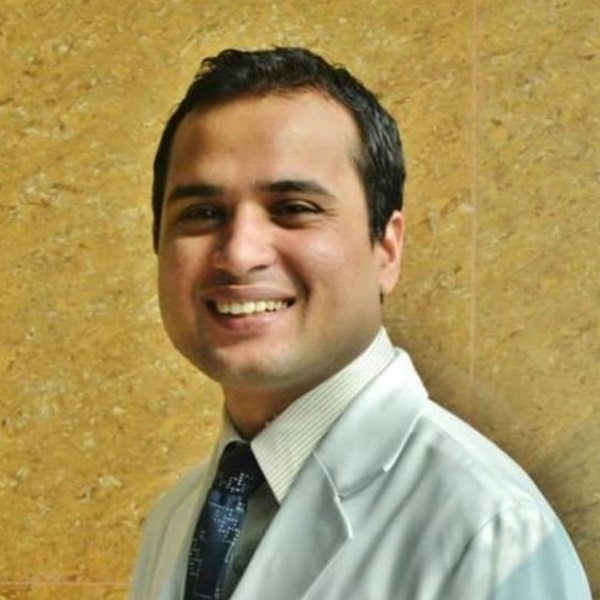
Dr. Bishworaj Bastakoti completed his radiology residency at the National Kidney and Transplant Institute, Manila, and is a Diplomate of the Philippine College of Radiology. He is a member of the Nepal Radiologist Society and has been registered with the Nepal Medical Council as a radiologist since 2016.
Dr. Nawaraj Paudel completed his residency at East Avenue Medical Centre, Manila. He is a former assistant professor of radiology at Universal College of Medical Sciences and has been involved with Gandaki Medical College. He is a member of the Nepal Radiologist Society and has been NMC-registered since 2016. Full profiles are on our doctors page.
Both radiologists report CT and MRI daily on KDRC's own 192-slice CT scanner and open-type MRI. That everyday experience carries over to studies sent from partner facilities.
How are patient data and privacy protected?
Patient images and reports are sent only through a secure transfer channel agreed and tested with each partner, and are handled confidentially like any medical record. International guidance from the European Society of Radiology sets out the main principles:
- Patients should be told when their images may be reported by a teleradiology service.
- Transmission methods must reliably protect patient data.
- Agreements between the facility and the reporting service should cover confidentiality, privacy and network security.
- Secure storage of images remains the responsibility of the organisations involved.
Partners should avoid sending identifiable images through personal messaging apps. Our team will agree the transfer method, who may access studies and how reports are returned before routine reporting begins.
How are urgent findings communicated?
Urgent and critical findings are communicated directly to the referring facility as soon as they are seen, not left waiting in a written report. Each partner names a reachable contact for this purpose. The table below shows examples of findings that need a direct call.
| Example finding | Typical modality | Action |
|---|---|---|
| Bleeding inside the skull | CT head | Direct call to the referring doctor; written report follows |
| Signs of acute stroke | CT head, CT angiography | Direct call so treatment and transfer can be decided |
| Blood clot in the lungs | CT pulmonary angiography | Direct call to the referring doctor |
| Free air or perforation in the abdomen | CT abdomen, X-ray | Direct call for surgical review |
| Spinal cord compression | MRI spine, CT spine | Direct call for urgent specialist review |
Teleradiology supports, but never delays, emergency care. A patient with suspected stroke, major trauma, severe chest pain or breathing difficulty should be stabilised and treated or transferred according to local emergency protocols while the scan is being reported.
Teleradiology vs an on-site radiologist vs sending films
Teleradiology gives a facility specialist reporting without employing a resident radiologist, and is much faster than couriering films or CDs. The comparison below summarises the options.
| Feature | Teleradiology | Films or CDs by courier |
|---|---|---|
| Time to reach the radiologist | Minutes after the scan | Hours to days |
| Image quality | Full DICOM, every slice | Printed films lose slices and detail |
| Urgent findings | Called through directly | Delayed until films arrive |
| Patient travel | Not needed | Often needed |
| Comparison with prior scans | Easy if priors are sent | Depends on what is carried |
An on-site radiologist remains essential for procedures such as image-guided biopsy, fluoroscopy and ultrasound. Teleradiology complements local staff rather than replacing them.
Many facilities use a mix. A local doctor or radiologist handles procedures and routine work, while teleradiology covers complex CT and MRI studies, second opinions and times when no local radiologist is available. Others use teleradiology for nearly all cross-sectional imaging because recruiting a full-time radiologist in a smaller town is difficult. Whichever model you choose, the aim is the same: a timely, accurate report that helps the treating doctor act, and fewer patients making long road journeys only to have an existing scan read.
What teleradiology means for patients
For patients, teleradiology means a specialist reads your scan without you having to travel, and your own doctor receives the report. If you were scanned at a hospital or clinic outside Pokhara, your images may be reported by KDRC radiologists. Your treating doctor still explains the result and decides on treatment.
If the report recommends further imaging that your local facility cannot provide, you can book it at KDRC in Pokhara, for example CT angiography, MRI or a CT-guided biopsy. Bring your earlier report and images so the radiologist can compare them. Patients who are too unwell to travel by ordinary vehicle can use KDRC's ambulance service.
Keep a copy of every report and, where possible, the images on CD or another digital copy. When you see a new doctor or have a follow-up scan, these records allow a direct comparison. That comparison often shows whether a finding is stable, improving or changing, and it can spare you an unnecessary repeat scan. If you live in or near Pokhara, you can also ask your doctor whether teleradiology in Pokhara, through KDRC, can review a scan done elsewhere before you travel.
How much does teleradiology reporting cost?
Teleradiology reporting is priced per partnership, because the cost depends on the type and number of studies, how complex they are and how urgently reports are needed. The main factors are:
- Modality and region. A chest X-ray takes less time to report than a multi-region CT or MRI.
- Volume. Regular partners sending many studies have different arrangements from occasional users.
- Urgency. Priority reporting for emergency cases is agreed in advance.
- Complexity. CT angiography, cancer staging and second-opinion reviews need more time.
To discuss pricing for your facility, call 061-553538 or 9856077433, or email kaligandaki.dc@gmail.com.
Why choose KDRC's teleradiology service in Nepal?
KDRC combines experienced consultant radiologists, daily experience with advanced CT and MRI, and a base in Pokhara that serves Gandaki Province and the rest of Nepal.
- Consultant radiologists trained in Manila residency programmes and NMC-registered since 2016.
- Advanced imaging experience from reporting a 192-slice high-resolution Siemens CT and an open-type MRI every day.
- Clear onward pathway. Patients needing further imaging, biopsy or FNAC can be seen at the same centre.
- Personal setup. Our team agrees the transfer channel, reporting priorities and urgent-call process with each partner.
- 192-slice CT at KDRC
- Advanced soft-tissue imaging
- Transfer for unwell patients
- Vessel imaging for referred patients
- Image-guided tissue sampling
How to start a teleradiology partnership with KDRC
To start, call 061-553538 or 9856077433, email kaligandaki.dc@gmail.com, or send a message through our contact page. We will discuss your equipment, expected study volume and reporting needs. Then we set up and test the secure transfer channel with sample studies, agree priorities and the urgent-call process, and begin routine reporting. KDRC is on Shantipath, Amarsingh Chowk, Pokhara-10, Kaski. You are welcome to visit and see how studies are reported. See all of KDRC's diagnostic services.
How to prepare
- Scanner able to export DICOM studies.
- Reliable internet connection at the facility.
- Named coordinator and an urgent-call contact.
- Request form with clinical question, history and relevant results for each study.
- Prior images or reports where available.
- Process to inform patients that images may be reported remotely.
- Call 061-553538 or 9856077433 to arrange setup and testing.
How long it takes
Images usually reach the radiologist within minutes of being sent; reporting priorities for routine and urgent studies are agreed with each partner.
Price in Pokhara
Teleradiology pricing depends on modality, study volume, complexity and urgency, so KDRC agrees it per partnership. Call 061-553538 or 9856077433 to discuss your facility's needs.
What to expect at KDRC
A partnership begins with a call to 061-553538 or 9856077433, or an email to kaligandaki.dc@gmail.com. Our team asks about your facility: which CT, MRI or X-ray systems you use, roughly how many studies you perform, which hours you need cover for and who your coordinator will be. Next, we agree a secure transfer method and test it with sample studies so that complete DICOM series, including thin slices, arrive intact. Together we agree a request format with the clinical question and history, reporting priorities for routine and urgent cases, and a named contact who can always be reached for critical findings. Your staff explain to patients that their images may be reported remotely. Once routine reporting starts, your technologist sends each study with its request. A KDRC consultant radiologist reviews every series on diagnostic software, compares previous scans where available and asks for missing details when needed. Critical findings are telephoned straight to your contact. The signed written report then returns to your facility for the treating doctor and the patient's record. Patients who need further imaging can be referred to KDRC in Pokhara.
Frequently asked questions
What is teleradiology?
Teleradiology is the reporting of medical images by a radiologist working away from the place where the scan was taken. The images are sent securely over the internet as DICOM files. KDRC in Pokhara provides teleradiology for facilities across Nepal, with CT, MRI and X-ray studies reported by its consultant radiologists.
Does KDRC provide teleradiology services in Nepal?
Yes. KDRC in Pokhara offers teleradiology reporting to hospitals, clinics and imaging centres across Nepal. Facilities send CT, MRI and digital X-ray studies through a secure channel, and consultant radiologists return signed reports. Call 061-553538 or 9856077433, or email kaligandaki.dc@gmail.com, to discuss a partnership.
Which image formats does KDRC accept?
KDRC accepts standard DICOM studies from CT, MRI and digital X-ray systems. DICOM is the worldwide standard for exchanging medical images with clinical quality, so the scanner brand does not matter. Photographs of monitors or printed films are not suitable for formal reporting, because detail and slice information are lost.
Is teleradiology as accurate as having a radiologist on site?
Research shows it can be. A prospective study of 7,209 after-hours CT reports found clinically important discrepancies in 5.8% of teleradiology reports and 6.1% of in-house reports, with no significant difference. Accuracy depends on complete images, good clinical information and access to previous scans, whether the radiologist is remote or local.
Who reports teleradiology studies at KDRC?
Consultant radiologists Dr. Bishworaj Bastakoti and Dr. Nawaraj Paudel report teleradiology studies. Both have been at KDRC since its inception, trained in radiology residency programmes in Manila, are members of the Nepal Radiologist Society and have been registered with the Nepal Medical Council since 2016.
How fast are teleradiology reports?
Images usually reach the radiologist within minutes of being sent. Reporting priorities for routine and urgent studies are agreed with each partner facility when the service is set up, and critical findings are communicated directly to a named contact as soon as they are seen. Call 061-553538 to discuss your requirements.
Is patient data secure with teleradiology?
Yes. Studies travel only through a secure transfer channel that our team agrees and tests with each partner, and they are handled confidentially like any medical record. Partners should not send identifiable images through personal messaging apps. Patients should be told that their images may be reported remotely.
What does a hospital need to start teleradiology?
A hospital needs a CT, MRI or digital X-ray system that exports DICOM, a reliable internet connection, a named coordinator and an urgent-call contact. It also needs a request form with the clinical question for every study. Our team sets up and tests the transfer channel before routine reporting begins.
Can facilities outside Pokhara use KDRC teleradiology?
Yes. Teleradiology is designed for facilities anywhere in Nepal, including district and community hospitals in hilly or remote areas without a resident radiologist. Any facility with a suitable scanner and internet connection can discuss a partnership by calling 061-553538 or 9856077433.
Can ultrasound be reported by teleradiology?
Ultrasound is usually reported by the doctor who performs it, because it is a real-time examination and accuracy depends on the person scanning. Teleradiology works best for CT, MRI and digital X-ray. Patients near Pokhara can have ultrasound at KDRC, including mobile ultrasound at home for those who cannot travel.
Can I get a second opinion on my CT or MRI from KDRC?
Yes, a second opinion is possible when the full DICOM study is available, usually on a CD or through the facility that scanned you. Bring the images, the original report and your doctor's request to KDRC in Pokhara, or ask your facility to send them. Call 061-553538 to arrange it.
How are urgent findings handled in teleradiology?
Urgent findings such as brain bleeding, signs of stroke, a lung clot or spinal cord compression are communicated directly to the referring facility's named contact as soon as they are seen. The written report follows. Emergency treatment should never wait for a report; patients are managed by local emergency protocols.
How much does teleradiology reporting cost?
Teleradiology pricing is agreed per partnership. It depends on the modality, the number of studies, their complexity and how urgently reports are needed. A chest X-ray takes less time to report than a multi-region CT or MRI. Call 061-553538 or 9856077433 to discuss pricing for your facility.
Sources
- pmc.ncbi.nlm.nih.gov/articles/PMC3948905/
- pmc.ncbi.nlm.nih.gov/articles/PMC8065948/
- dicomstandard.org/about
- radiologyinfo.org/en/info/article-your-radiologist
- fda.gov/radiation-emitting-products/medical-x-ray-imaging/computed-tomography-ct
This page is general health information reviewed by our radiologists. It is not a diagnosis — always follow your own doctor's advice. In an emergency, call our 24-hour ambulance or go to the nearest emergency department.
Written by
Dr. Nawaraj PaudelConsultant Radiologist
Consultant Radiologist at KDRC, Pokhara. Residency at East Avenue Medical Centre, Manila; formerly Assistant Professor of Radiology at Universal College of Medical Sciences. Member, Nepal Radiologist Society.
View doctor's profile →Medically reviewed by
Dr. Bishworaj BastakotiConsultant Radiologist
Consultant Radiologist at KDRC, Pokhara. Residency at the National Kidney and Transplant Institute, Manila; previously at Western Regional Hospital. Member, Nepal Radiologist Society.
View doctor's profile →Shantipath, Amarsingh Chowk, Pokhara-10, Kaski · 061553538 / 9856077433
Related services in Pokhara
192 Slice High Resolution CT Scan
A CT scan in Pokhara at KDRC is a fast, painless X-ray test that uses a computer to create detailed cross-sectional imag…
Open Type MRI
An MRI in Pokhara at KDRC is a scan that uses a strong magnet and radio waves, not X-rays, to picture the brain, spine, …
CT Angiography
CT angiography in Pokhara at KDRC is a contrast-enhanced CT scan that maps the arteries and veins of the heart, brain, n…
Biopsy
A biopsy test in Pokhara at KDRC is a procedure in which a small tissue sample is taken from a lump or abnormal area, us…