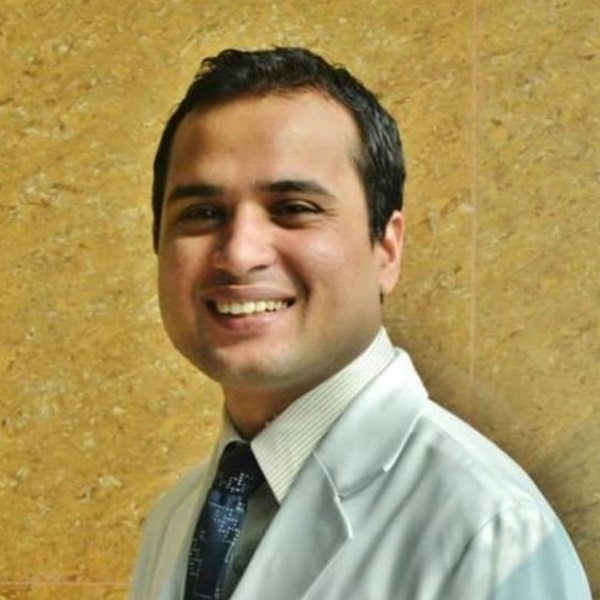
Dr. Bishworaj Bastakoti
Consultant Radiologist · Registered with Nepal Medical CouncilMD Radiology · Diplomate, Philippine College of Radiology · NMC-registered since 2016
Dr. Bishworaj, a resident of Pokhara, Nepal has been serving as consultant radiologist since inception of the institute. He has previously served in Western Regional Hospital. He is currently involved in various prestigious institutions in Pokhara. Dr. Bastakoti has done his residency training from National Kidney and Transplant Institute, Manila, Philippines. He has been Diplomate of Phillipine college of radiology and is goodstanding member of Nepal Radiologist Society. He is a registered radiologist in Nepal Medical Council since 2016.
Diagnostic radiologyCT imagingMRIUltrasoundInterventional procedures
Book an appointment Facebook
Dr. Bishworaj Bastakoti, a resident of Pokhara, Nepal, has been serving as consultant radiologist since the inception of the institute. He previously served at Western Regional Hospital and is currently involved in various prestigious institutions in Pokhara. He completed his residency training at the National Kidney and Transplant Institute, Manila, Philippines, is a Diplomate of the Philippine College of Radiology and a good-standing member of the Nepal Radiologist Society. He has been a registered radiologist with the Nepal Medical Council since 2016.
A CT scan in Pokhara at KDRC is a fast, painless X-ray test that uses a computer to create detailed cross-sectional images of the head, chest, abdomen, spine, bones and blood vessels.
An MRI in Pokhara at KDRC is a scan that uses a strong magnet and radio waves, not X-rays, to picture the brain, spine, joints and organs in detail.
Ultrasound (USG, sonography) in Pokhara at KDRC is a painless, radiation-free scan that uses high-frequency sound waves to show live images of organs, blood vessels and the unborn baby.
An anomaly scan in Pokhara at KDRC is a detailed Level II (TIFFA) pregnancy ultrasound, usually done at 18–22 weeks, that checks the baby's brain, face, spine, heart, abdomen, kidneys and limbs, plus growth, placenta and fluid.
Endoscopy in Pokhara at KDRC is an upper GI examination (gastroscopy) in which a specialist passes a thin, flexible HD camera through the mouth to view the food pipe, stomach and duodenum.
A BMD test in Pokhara at KDRC is a quick, painless, very low-dose X-ray scan that measures the mineral content of your bones.
CT angiography in Pokhara at KDRC is a contrast-enhanced CT scan that maps the arteries and veins of the heart, brain, neck, lungs, abdomen and limbs without inserting a catheter.
An EEG test in Pokhara at KDRC is a painless recording of the brain's natural electrical activity using small electrodes placed on the scalp.
A PFT test in Pokhara at KDRC is a set of painless breathing tests, led by spirometry, that measure how much air your lungs hold and how fast you can blow it out.
An FNAC test in Pokhara at KDRC is fine needle aspiration cytology: a very thin needle draws cells from a lump, often under ultrasound guidance, for a pathologist to examine.
A biopsy test in Pokhara at KDRC is a procedure in which a small tissue sample is taken from a lump or abnormal area, usually with a core (trucut) needle under ultrasound guidance and local anaesthetic, and sent to a pathology laboratory.
Catheter insertion in Pokhara at KDRC is the sterile placement of a soft urinary catheter (IDC) into the bladder to drain urine when a person cannot pass it naturally.
A Doppler test in Pokhara at KDRC is a colour Doppler ultrasound scan that measures the speed and direction of blood flow in arteries and veins.
Mobile ultrasound service in Pokhara at KDRC brings a portable ultrasound machine and trained team to the bedside of patients who cannot easily travel, such as elderly, bedbound or recovering patients.
Teleradiology service in Nepal from KDRC means CT, MRI and X-ray images taken at a hospital or clinic are sent securely as DICOM files to consultant radiologists in Pokhara, who interpret them and return a signed report.
The ambulance service in Pokhara from KDRC runs 24/7 for emergencies, hospital-to-hospital transfers, discharge transport and bringing patients for scans.
- Why Is an MRI Expensive? What Actually Drives MRI Cost
MRI is expensive mainly because of machine time: a magnet serves far fewer patients per hour than an X-ray room. Body region, contrast and reporting add to the cost.
- What a 192-Slice CT Scanner Means for Patients
A 192-slice CT scanner records 192 thin slices per rotation, giving faster scans, shorter breath-holds, sharper images and smooth 3D reconstructions.
- What Affects CT Scan Cost? Contrast, Body Part, Slices and Reporting
CT scan cost depends on the body region, how many regions are scanned, whether contrast dye is used, 3D reconstructions and the radiologist's reporting work.
- What Is an MRI Scan? How It Works, What It Shows and How Long It Takes
An MRI scan uses a strong magnetic field and radio waves, not X-rays, to create detailed images of the brain, spine, joints and internal organs. Most scans take 20 to 45 minutes.
- How to Prepare for a CT Scan: Fasting, Clothing & What to Bring
A plain CT scan needs no preparation. A contrast CT usually needs 4–6 hours without food, metal-free clothing, a medicine check and your kidney test results.