
MRI8 min read
Why Is an MRI Expensive? What Actually Drives MRI Cost
MRI is expensive mainly because of machine time: an MRI magnet serves far fewer patients per hour than an X-ray room, so every extra series has a real cost. The price also depends on the body part and number of regions, gadolinium contrast dye, protocol complexity such as MRCP, and consultant radiologist reporting.
Also called: MRI price in Pokhara, MRI scan charges Nepal, MRI rate Pokhara, contrast MRI cost Pokhara, open MRI price Nepal
Booking, timings and preparation: see our Open Type MRI page.
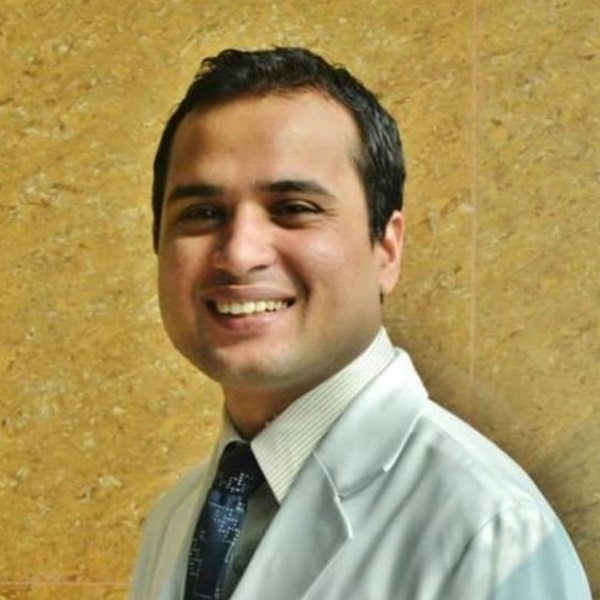 By Dr. Bishworaj Bastakoti · Consultant RadiologistReviewed by Dr. Nawaraj Paudel· Last reviewed 12 October 2026· Published 12 October 2026
Key takeaways
- MRI cost in Pokhara depends on the body part, number of regions, contrast dye and protocol complexity.
- Machine time is the biggest driver, because each MRI study occupies the scanner for much longer than an X-ray.
- A contrast MRI costs more than a plain scan because it needs gadolinium, a cannula and extra image series.
- At KDRC the quote includes the scan, the consultant radiologist's report and your images, with no hidden charges.
- Call 061-553538 or +977-9856077433 with your referral for KDRC's current MRI price.
Why is an MRI expensive?
An MRI is expensive mainly because of machine time: an MRI magnet serves far fewer patients per hour than an X-ray room. The final cost then depends on the body part scanned, whether contrast dye is injected, the specific study your doctor requests and consultant radiologist reporting. Because the same word "MRI" can mean a short single-region scan or a long multi-region contrast study, KDRC quotes each scan individually before you book. For the current price of your exact study, call 061-553538 or +977-9856077433.
Magnetic resonance imaging uses a strong magnetic field and radio waves, not X-rays, to create detailed pictures of the brain, spine, joints and internal organs. RadiologyInfo.org explains that MRI shows soft tissue such as nerves, discs, ligaments and organs with a clarity that X-rays and often CT cannot match. That detail is exactly why doctors order it, and it is also why the price is higher than for simpler tests.
Diagnostic centres rarely publish fixed MRI price lists online, and for good reason. A quote only makes sense when it is tied to the actual referral. At KDRC the desk checks your doctor's request, tells you the current price and explains exactly what the quote includes before you commit to a time slot. For a full overview of the scan itself, see our complete guide to MRI scans, and our MRI in Pokhara page covers timings and booking.
What makes up the price of an MRI scan?
Four things drive MRI pricing, and a fair quote reflects each of them. Knowing them helps you ask clear questions when you call.
- Body part and region count. One knee costs less than a whole-spine study covering the neck, upper back and lower back as three separate regions.
- Contrast dye. A gadolinium injection adds materials, a cannula, monitoring and extra image series before and after the injection.
- Protocol complexity. Specialised studies such as MRCP of the bile ducts or MR angiography of blood vessels need longer machine time and more sequences.
- Radiologist reporting. A consultant radiologist reviews every series and writes the report. That expert time is part of every study, not an optional extra.
- Machine time. This is the biggest driver of all. An MRI magnet serves far fewer patients per hour than an X-ray room, so every additional series has a real cost.
MRI cost by body part, contrast and study type
Most referrals name one of a handful of common studies. Each occupies the scanner for a different length of time and needs a different amount of reporting work, which is why each carries a different charge.
How the body part changes the cost
A small joint such as a wrist or knee is a relatively short study. A brain scan adds more sequences, a whole-spine study covers three separate regions, and abdominal or pelvic protocols involve breathing instructions and longer series. According to the NHS, an MRI scan usually takes between 15 minutes and 1 hour, depending on the area and the number of images needed.
| Study | Often requested for | What drives its price |
|---|---|---|
| MRI knee or shoulder | Ligament, cartilage and tendon injuries | Single joint; fewer image series |
| MRI brain | Headache, seizures, stroke, dizziness | More sequences; contrast for some questions |
| MRI spine | Slipped disc, sciatica, nerve compression | One region or the whole spine as three |
| MRI abdomen or MRCP | Liver, kidney, bile duct problems | Breath-hold series and longer protocol |
| Contrast or multi-region study | Tumours, infection, follow-up | Gadolinium, extra series, more reporting |
Why contrast dye adds to the cost
A contrast-enhanced MRI uses gadolinium, a cannula, extra image series and additional radiologist time, so it is priced above a plain scan. The dye makes inflammation, tumours and blood vessels stand out, which can change the diagnosis. Whether you need it is a medical decision made by your referring doctor with the radiologist. If you have kidney problems, mention this at booking; RadiologyInfo.org's contrast safety page and our article on contrast dye safety explain the screening.
Does the open MRI design change the price?
No. At KDRC the open-type MRI is the standard machine for all patients, so pricing follows the scan type, body part and contrast use, not the scanner design. Comfort and access stay the same whatever region is scanned. Read more in open MRI versus closed MRI.
MRI vs CT scan and X-ray cost
An MRI usually costs more than an X-ray or a CT scan of the same region. MRI magnets are among the most expensive machines in medicine to install, run and maintain, each study occupies the scanner for much longer, and every case needs expert reporting. X-rays and CT are much faster to acquire, so their running cost per patient is lower.
That does not make MRI overpriced. It reflects what the technology delivers: nerves, discs, ligaments and brain tissue in fine detail, with no ionising radiation. CT, on the other hand, is often the right first test for bleeding, bone injury, lungs and emergencies. The right scan is the one that answers your doctor's question, and a cheaper test that misses the answer is not a saving.
| Factor | MRI | CT scan |
|---|---|---|
| Typical cost | Usually higher for the same region | Usually lower for the same region |
| Scan time | Usually 15 minutes to 1 hour | Often a few minutes on the table |
| How it works | Strong magnet and radio waves | X-rays and a computer |
| Best for | Brain, spinal cord, discs, joints, ligaments | Bleeding, bone, lungs, emergencies |
| Radiation | No ionising radiation | Small dose of ionising radiation |
If you are weighing the two, our plain-language comparison of CT scan versus MRI explains which scan suits which problem, and what affects CT scan cost covers the CT side of the cost question.
How to get a clear MRI quote at KDRC
Getting an exact price takes one short phone call. Keep your doctor's referral in front of you so the desk can match the wording, such as "MRI LS spine" or "MRI brain with contrast", to the exact study and its current price.
- 1Keep your referral readyHave the doctor's note in hand so the exact study name and body part can be matched.
- 2Call the deskRing 061-553538 or +977-9856077433 and read out what the referral says.
- 3Hear the current priceThe desk tells you today's price and confirms whether contrast is part of the study.
- 4Ask what is includedConfirm the quote covers the scan, the radiologist report and your images.
- 5Mention insurance needsIf you will claim, say so, so the invoice and report suit your insurer.
- 6Book and prepareChoose a slot and follow the metal-screening and clothing advice so the scan is not repeated.
Four questions protect you at any imaging centre: Is the radiologist report included? Are the images yours to take away? Does adding contrast change the price? If a scan needs repeating for quality, is it charged again? A transparent centre answers all four before you ask. At KDRC, anything that would change the quote, such as adding contrast or an extra region, is discussed with you before it happens.
If the quoted price is difficult for you, talk to the desk openly before booking. Payment options can often be discussed, and in some cases your doctor may suggest starting with the scan that answers the most urgent question first.
What your MRI fee covers and how insurance works
At KDRC the quoted price includes the scan, the consultant radiologist's report and your images. There is no separate reporting fee and no hidden charges added afterwards. That matters when comparing centres, because a lower headline figure can exclude the report or the images.
Many employer and private health insurance policies in Nepal cover MRI when it is medically indicated and referred by a licensed doctor, but coverage and claim paperwork differ by insurer and plan. Social security scheme members should confirm their entitlement with their scheme office. KDRC provides the invoices and reports that claims need. Keep three documents safe: the referral and prescription, the payment invoice and the final radiologist report. Claims are delayed far more often by missing paperwork than by the scan itself.
MRI itself uses no ionising radiation, and MedlinePlus notes that the main safety concern is metal in or on the body. Good preparation also protects your money: metal screening, the right clothing and staying still mean the scan is less likely to need repeating.
Common mistakes and myths about MRI cost
- Myth: the cheapest quote is always the best deal. A low figure may leave out the report, the images or contrast. Compare like with like.
- Mistake: asking for contrast "just in case". Contrast is chosen by your doctor and radiologist for a reason. Without one it only adds cost and an injection.
- Myth: open MRI must cost more. At KDRC the open-type MRI serves every patient, so price follows the study, not the machine.
- Mistake: arriving without a clear referral. A vague request can mean the wrong region or protocol. Ask your doctor to write exactly what must be scanned.
- Mistake: moving during the scan. Movement blur is the most common reason images need retaking, so follow preparation advice and stay still.
- Myth: MRI is always better than CT, so it is worth the extra cost. For bleeding, bone and lung questions, CT is often the right first test.
Anxious patients save money indirectly too: the open design at KDRC means fewer abandoned scans and fewer rebookings. To confirm today's price for your referral, visit our open-type MRI at KDRC or contact KDRC at Shantipath, Amarsingh Chowk, Pokhara-10, and call 061-553538.
- Usually cheaper and faster; first test for bleeding and bone
- Why dye adds cost and needs screening
- Preparation and what happens on the day
- Scanner design does not change KDRC's price
- Lower-cost, radiation-free first test for some problems
Example
Illustrative example (fictional). Prakash, a 52-year-old driver from Lekhnath, had lower back pain running down his left leg for two months. His doctor wrote "MRI LS spine" on the referral. Prakash had heard that MRI was expensive and worried the bill would grow once he arrived, so he kept putting it off.
His wife Bimala called 061-553538 with the referral in hand. The desk explained that a lumbar spine study is a single region, that the doctor had not asked for contrast, and gave her the current price. They confirmed that the quote covered the scan, the consultant radiologist's report and the images, and that any change, such as adding contrast, would be discussed first.
Because Prakash's employer insurance reimburses diagnostics, Bimala asked for an invoice in his name. On the day he removed all metal, lay still on the open scanner, and the study went smoothly without a repeat. With the referral, invoice and report together, his claim was straightforward, and there were no surprise charges.
Frequently asked questions
How much does an MRI cost in Pokhara?
MRI cost in Pokhara varies with the body part, the number of regions, contrast dye and the type of study, so one figure cannot cover every case. Call KDRC on 061-553538 or +977-9856077433 with your referral for the current price.
Is a contrast MRI more expensive than a plain MRI?
Yes. A contrast MRI uses gadolinium, a cannula, extra image series and more radiologist time, so it costs more than a plain scan of the same region. Your doctor decides whether contrast is needed.
Is open MRI more expensive than closed MRI?
Not at KDRC. The open-type MRI is the standard machine for all patients, so pricing follows the scan type, body part and contrast use, not the scanner design.
Do I pay extra for the MRI report?
No. At KDRC the quoted MRI price covers the scan, the consultant radiologist's report and your images. If any additional charge could apply, staff explain it and get your agreement first.
Why does an MRI cost more than a CT scan?
MRI machines are expensive to run and maintain, and each study occupies the scanner much longer than a CT scan. Every study also needs detailed expert reporting.
Does insurance in Nepal cover MRI scans?
Many employer and private policies cover MRI when it is medically indicated and referred by a licensed doctor, but rules differ by plan. KDRC provides the invoices and reports that claims require.
Related tests at KDRC Pokhara
Questions or bookings: call +977-61553538 or +977-9856077433.
Go deeper
Sources
- www.radiologyinfo.org/en/info/bodymr
- www.radiologyinfo.org/en/info/safety-contrast
- www.nhs.uk/tests-and-treatments/mri-scan/
- medlineplus.gov/ency/article/003335.htm
- my.clevelandclinic.org/health/diagnostics/4876-magnetic-resonance-imag
This article is general information, not medical advice. Always consult your doctor about your specific situation.
About the author
Dr. Bishworaj BastakotiConsultant Radiologist
Consultant Radiologist at KDRC, Pokhara. Residency at the National Kidney and Transplant Institute, Manila; previously at Western Regional Hospital. Member, Nepal Radiologist Society.
View doctor's profile →
Expert reviewer
Dr. Nawaraj PaudelConsultant Radiologist
Consultant Radiologist at KDRC, Pokhara. Residency at East Avenue Medical Centre, Manila; formerly Assistant Professor of Radiology at Universal College of Medical Sciences. Member, Nepal Radiologist Society.
View doctor's profile →